The browser does not support JavaScript. Please access the web page using another browser.

35mm slide scanning service

Affordable 120, 620 Medium & Large Format Film Scanning, Transparency Scanning

Click here for the Medium & Large Format Order Form

Affordable Large Format Film Scanning
Click here for the Medium & Large Format
Order Form and to Estimate your costs


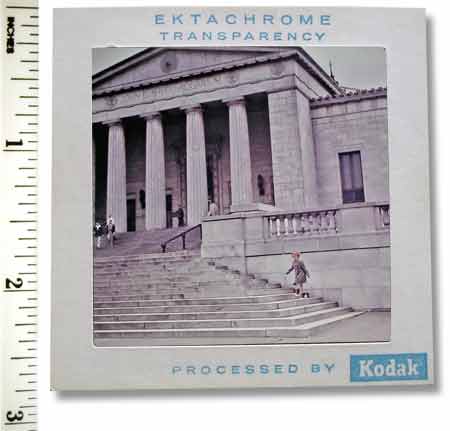
medium format slide examplePlease note that we do not develop your large or medium format 120 or 620 film for you. We will transfer your developed film negatives or positives to digital images and put them on a CD or DVD data disk. Our charge for scanning medium format film up to 120 or 620 film is $2.00 per 6(cm) x 6(cm) or 2.25" x 2.25" frame. They are scanned at 1200 ppi at $2 per film. (Some people refer to these slides as 55mm.) The price goes up from there depending on the size. We feel that our prices are very reasonable.

We scan Large Format Film up to 8" x 10".

lage format 4x5A "View Camera" is used for exposing Large Format film. This is a large, bellows type camera and the film sizes can go from 4x5, 5x7, 4x10, 5x12, 8x10, 11x14, 7x17, 8x20, 12x20, 20x24, and 30x40. The most popular sizes are 4x5 and 8x10. View cameras are used to achieve a more detailed picture with less grain.

View cameras use sheet film but some cameras can also take an adapter to use roll film. Most View Cameras have a lot of manual settings and are difficult for the amateur to master easily. Sheet film is also more expensive than roll film but, if you want the picture quality of a large format camera, this is something that you have to deal with.

We can scan your film, negatives and slides up to 8" by 10". Please note that there is no place to enter these larger size films on our regular order form. Fill in the Medium and Large format order form, print it out and send it with your job.

Just for size comparison sake, a 35mm slide has an image area of 1.375" x .875" and is  1.20 square inches. In order to blow this image up to a usable size, it is necessary to scan it at a higher resolution than a larger film requires.

A 5x7" transparency scanned at 300ppi would be more than sufficient for printing at full size in any magazine and would only cost $9.80, including color tweaking and spotting of any dust. The same size 5x7" transparency would cost $22.54 for scanning at 1200ppi. This could yield a high resolution print of 30" x 42" and could be saved as a TIFF (Tag Image File Format) file, with a file size of approximately 125 megs. We could get about five of them on  a CD or thirty-seven on a DVD. In most cases, you probably don't need a scan of this high quality unless you are going to print a large picture.

An 8x10" transparency scanned at 300ppi would be more than sufficient for printing at full size in any magazine and would only cost $14.40, including color tweaking and spotting of any dust.

Generally you will need 250 dpi for prints. You can make do with 200. More than 300 is excess file size depending on how large a print you need. The viewing distance matters. The farther back you are the less DPI you will need. Just as an example, roadside billboards are 6 dpi. At 400 yards and in a car going 40 miles an hour, they will look fine.

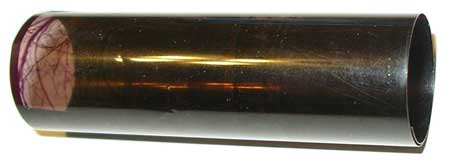
If your medium format film has been rolled up and has a tight curl to it, it is going to be hard for us to get a good scan for you. Please don't send us film in this condition unless you are willing to accept whatever we can get for you.

Click here for the Medium & Large Format
Order Form and to Estimate your costs

medium format 120 6x6 film negative

Medium Format Film Rolled Up

medium fomat film rolled up

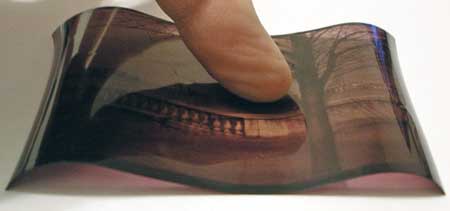
medium format wavy film

This Is What You Get When You Store Your  Film Rolled Up.


120, 620 Medium Format Film:
A Brief History:

The Medium format film was created specifically for the Kodak Brownie cameras back in 1900-1901. It was a very simple camera that was basically, fixed focus and "point and shoot." It had a single shutter speed. The "Brownie" camera took its name from cartoon characters that were popular at the time depicting mischievous but good hearted elves.

Medium format means 120 and 220 size roll film. The film is on a spool rather than in a cassette.

Just about every emulsion from the major film companies was available in 120 film. Most were available in 220 as well. The difference between 120 and 220 film was that 220 was twice as long and therefore holds twice as many images as 120. The spool sizes were the same. What differs is that 120 film has a paper backing that runs the full length of the film. 220 film only has a paper leader. Thus more film can be wound in the same space with 220.

Walzflex TLR Medium Format 120 CameraMedium Film Formats

Essentially, 35mm film is a fixed size format: 24X36mm while brownie 120 format120 and 220 roll film can be used for several different frame widths and thus formats. The film is fixed at 6cm width so what varies is the length. The most common formats are, in Centimeters, — 645, 6X6, 6X7. The camera determines what "format" is shot onto the 120 or 220 roll of film. Some cameras had/have interchangeable backs which can change the size of the picture.

Although bigger in size, a 6X6 camera is usually convenient because it makes it unnecessary to rotate the camera between horizontal and vertical pictures. A 6x6 would get 12 shots to one roll of 120 film.

2 1/4" x 2 1/4" is the equivalent of a 6cm x 6cm film. This also works out to being about 56mm x 56mm.

Another size you will see expressed in imperial units is 2x3 (actually 2 1/4 x 3 1/4) commonly known as 6x9cm.

6cm × 7cm enlarges exactly to 8" × 10" paper, which accounts for its users calling it the ideal format.

The term "645 format" is sometimes used when referring to an ordinary 120 or 220 film used in the 6 × 4.5 cm picture format. 645 format cameras will get 16 pictures per roll of 120.

If bigger is better, why doesn't everyone use 6x7 cameras? The question here is quality vs. portability. 6x7 format cameras are heavy. They are basically made for studio use, whereas a 645 camera will give you the same portability as a high-end 35mm SLR camera. It's almost impossible to take 6x7 pictures without a tripod.

620 cameraKodak introduced the Six-20 camera in 1931 and along with it the 620 film. About this same time Kodak stopped manufacturing the cameras that take the 120 film. In the United Kingdom, Kodak Ltd. manufactured a few models in the 1950's and '60's. The Six-20 was classified as a "pinhole" camera, the view finder is on top.

620 film continued to be popular until the 1960's, when the introduction of the cartridge-loading Instamatics simplified the loading of film into cameras. The Brownie Reflex 20 was probably the last 620-film camera to be made by Kodak.

Kodak stopped manufacturing the 620 film in the 1990s but 120 film can be used in a 620 camera because it is the same size film. The difference is that the 120 spool is larger in diameter than the 620 spool. The film is identical, so all that needs to be done is the 120 film can be wound onto a 620 spool. This is a two step process since the film has a start and an ending. First you would have to wind the film off onto a spare 620 spool and then wind it back onto another 620 spool. Naturally, you would have to do this in a dark room.

If you have 35mm films that need to be scanned, please see our negative film scanning page.